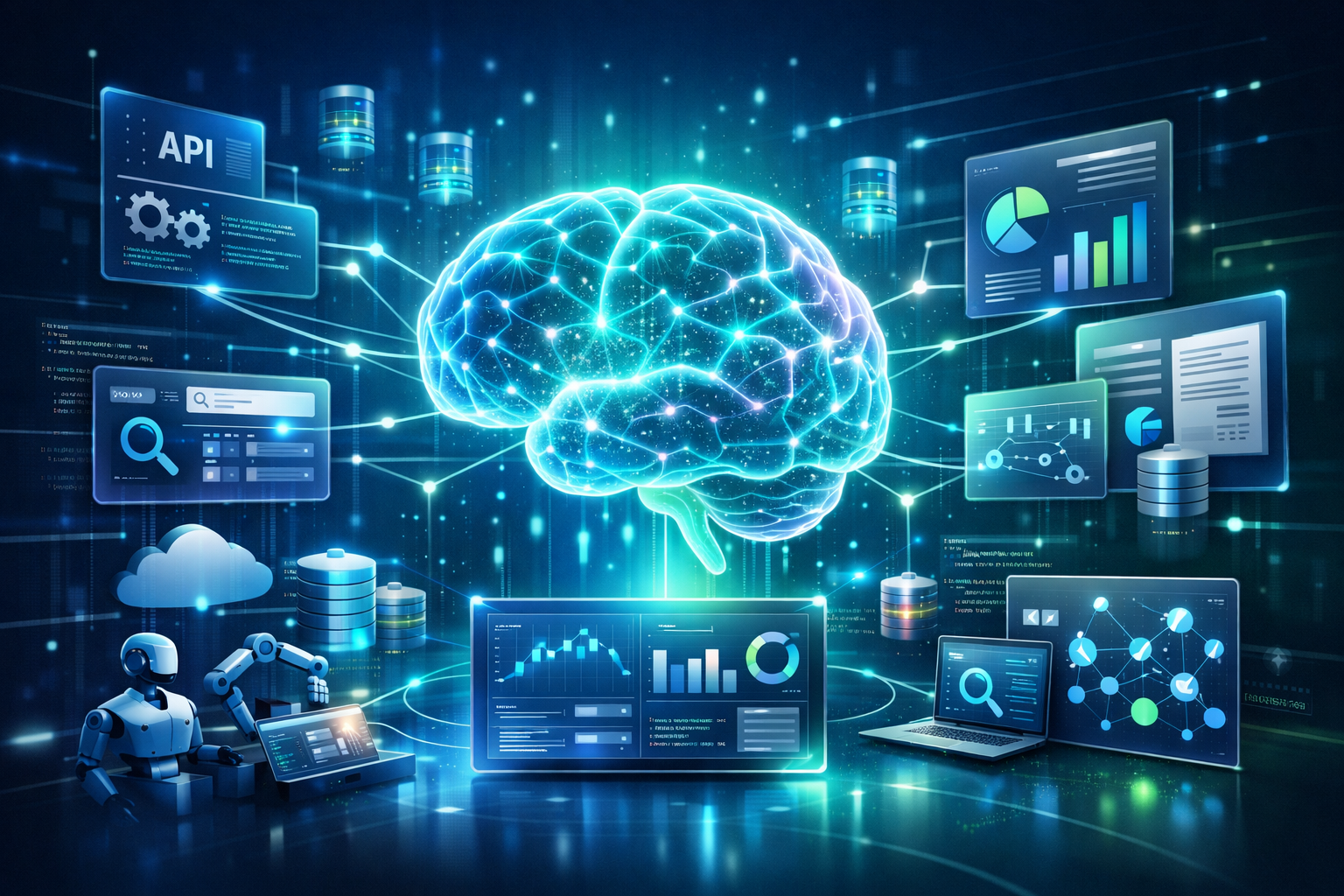
Learn the Master Agentic AI Roadmap for Beginners (2026 Guide to AI Agents, RAG & Frameworks). Master AI agents, RAG, LangChain, AutoGen, and build autonomous AI systems step-by-step.
Why Agentic AI Is the Future You Can’t Ignore
A few years ago, artificial intelligence mostly meant chatbots answering questions or models generating text and images. Today, we’re entering a new era—Agentic AI, where systems don’t just respond… they act.
Imagine an AI that can plan your entire marketing campaign, execute tasks across tools, analyze results, and optimize automatically. Or a system that books flights, compares prices, sends emails, and adjusts plans—all without constant human input. That’s the power of Autonomous AI Agents.
If you’re a beginner, this might sound overwhelming. But here’s the truth: mastering Agentic AI isn’t about knowing everything—it’s about following the right roadmap.
In this guide, I’ll walk you through a clear, structured path to mastering Agentic AI, using real-world insights, practical examples, and the most important concepts like LLM-based Agents, Prompt Engineering for Agents, and Multi-Agent Systems (MAS)—all explained in a simple, human way.
Let’s break it down step by step.

1. Understanding the Foundations of Agentic AI
Before jumping into tools and frameworks, you need to understand what makes Agentic AI different from traditional AI.
What is Agentic AI?
Agentic AI refers to systems designed to:
- Make decisions
- Take actions
- Use tools
- Learn from outcomes
Unlike static models, Autonomous AI Agents operate in loops:
- Observe
- Think
- Act
- Learn
This cycle is what makes them powerful—and also what makes them complex.
Core Concept: Agentic AI Architecture
At the heart of every intelligent agent is a well-designed Agentic AI Architecture. Think of it like the brain + nervous system of an AI agent.
A typical architecture includes:
- LLM core (decision-making engine)
- Memory layer (stores past interactions)
- Tool layer (APIs, databases, software)
- Planning module (decides next steps)
- Execution engine (performs tasks)
💡 Real-world example:
A customer support AI agent:
- Understands user queries (LLM)
- Remembers previous complaints (memory)
- Fetches data from CRM (tool use)
- Decides response strategy (planning)
- Sends reply (execution)
The Role of LLM-based Agents (Large Language Model Agents)
Modern agents are powered by LLM-based Agents, built on models like GPT.
These agents:
- Understand natural language
- Generate reasoning steps
- Interact with tools dynamically
But here’s the catch:
LLMs alone are not enough.
They need structure, memory, and planning—which brings us to the next step.
2. Building Intelligence: Prompting, Reasoning, and Memory
Once you understand the architecture, the next step is teaching your agent how to think.
Mastering Prompt Engineering for Agents
If LLMs are the brain, prompts are the instructions.
But prompting for agents is different from normal prompting.
Instead of:
“Write a blog”
You design prompts like:
“Analyze the task → break it into steps → decide tools → execute → verify output”
This is where Prompt Engineering for Agents becomes critical.
Key techniques:
- Task decomposition
- Role-based prompting (e.g., “You are a financial advisor agent…”)
- Step-by-step reasoning instructions
- Self-reflection prompts
💡 Pro tip:
Bad prompts = confused agents
Good prompts = autonomous systems
Thinking Like a Machine: Planning & Reasoning in AI Agents (Chain-of-Thought, ReAct)
For an agent to act intelligently, it must reason.
Two major approaches:
- Chain-of-Thought (CoT): Step-by-step reasoning
- ReAct (Reason + Act): Think → act → observe → repeat
These are part of Planning & Reasoning in AI Agents, and they’re game-changers.
💡 Example:
Task: “Book the cheapest flight”
Without reasoning:
- Random results
With reasoning:
- Search flights
- Compare prices
- Check dates
- Select best option
That’s real intelligence.
Memory Matters: Memory Systems in AI Agents (Short-term & Long-term Memory)
Humans learn from experience. Agents should too.
That’s where Memory Systems in AI Agents come in:
- Short-term memory: Current conversation context
- Long-term memory: Stored knowledge over time
Why this matters:
- Personalization
- Better decision-making
- Reduced repetition
💡 Example:
An AI sales agent remembers:
- Past conversations
- Customer preferences
- Buying behavior
This makes it smarter over time—not just reactive.
3. Enabling Action: Tools, APIs, and Real-World Execution
Now comes the exciting part—making your agent do things.
What Are Tool-Using AI Agents (Toolformer / API Integration)?
An agent without tools is like a brain without hands.
Tool-Using AI Agents can:
- Call APIs
- Access databases
- Send emails
- Run code
This is often inspired by models like Toolformer.
💡 Example tools:
- Google Search API
- Stripe API
- Slack integrations
- Custom backend services
Why Tool Usage Changes Everything
Without tools:
- Agents can only generate text
With tools:
- Agents can execute real tasks
💡 Example:
Instead of saying:
“Here are flight options…”
The agent:
- Searches flights
- Compares prices
- Books tickets
That’s the shift from AI assistant → AI executor.
Combining Tools + Reasoning
The magic happens when you combine:
- Planning
- Tool usage
- Memory
This creates fully Autonomous AI Agents capable of solving complex workflows.
4. Scaling Intelligence: Multi-Agent Systems and Frameworks
Once you understand single agents, the next level is coordination.
What Are Multi-Agent Systems (MAS)?
Instead of one agent doing everything, you create multiple specialized agents.
This is called Multi-Agent Systems (MAS).
💡 Example system:
- Research agent → gathers data
- Writing agent → creates content
- Editing agent → improves quality
- Publishing agent → uploads blog
Each agent has a role.
Why MAS Is Powerful
Benefits:
- Specialization
- Parallel execution
- Better scalability
- More human-like workflows
It’s similar to how companies operate—with teams, not individuals.
Using AI Agent Frameworks (LangChain, AutoGen, CrewAI)
Building agents from scratch is hard.
That’s why frameworks exist.
Popular AI Agent Frameworks:
- LangChain → modular agent building
- AutoGen → multi-agent collaboration
- CrewAI → role-based agent teams
These frameworks help you:
- Connect LLMs with tools
- Manage memory
- Orchestrate workflows
💡 Beginner tip:
Start with one framework—don’t try all at once.
5. Enhancing Knowledge: Retrieval and Real-Time Intelligence
Agents are only as good as the information they use.
Understanding Retrieval-Augmented Generation (RAG) for Agents
LLMs have limitations:
- Outdated knowledge
- Hallucinations
Retrieval-Augmented Generation (RAG) for Agents solves this.
It allows agents to:
- Fetch real-time data
- Access private documents
- Ground responses in facts
How RAG Works
- User asks a question
- Agent retrieves relevant documents
- LLM generates response using retrieved data
💡 Example:
A legal AI agent:
- Searches case laws
- Retrieves relevant documents
- Generates accurate legal advice
Why RAG Is Essential in 2026
Without RAG:
- Generic answers
With RAG:
- Accurate, contextual, real-time intelligence
6. Suggested Learning Path (Beginner to Advanced)
Here’s a practical roadmap you can follow:
Phase 1: Foundations (Week 1–2)
- Learn basics of LLM-based Agents
- Understand Agentic AI Architecture
- Practice simple prompting
Phase 2: Core Skills (Week 3–6)
- Master Prompt Engineering for Agents
- Learn Planning & Reasoning (CoT, ReAct)
- Build simple agents with memory
Phase 3: Tool Integration (Week 7–10)
- Work with APIs
- Build Tool-Using AI Agents
- Create real-world automation
Phase 4: Advanced Systems (Week 11–14)
- Explore Multi-Agent Systems (MAS)
- Use frameworks like LangChain, AutoGen, CrewAI
Phase 5: Production-Level AI (Week 15+)
- Implement RAG for Agents
- Optimize performance
- Deploy real applications
7. Real-World Use Cases You Should Try
To truly master Agentic AI, build projects.
Here are some ideas:
- AI SaaS growth agent (automates marketing)
- Personal finance agent (tracks + optimizes spending)
- AI recruiter (screens candidates + schedules interviews)
- Content automation system (multi-agent blog pipeline)
💡 Key insight:
Learning happens when you build—not just read.

Conclusion: Your Next Step in the Agentic AI Journey
Agentic AI is not just another tech trend—it’s a fundamental shift in how software works.
We’re moving from:
- Tools → Assistants → Autonomous systems
By mastering concepts like:
- Agentic AI Architecture
- Autonomous AI Agents
- Prompt Engineering for Agents
- Multi-Agent Systems (MAS)
- Retrieval-Augmented Generation (RAG) for Agents
…you position yourself at the forefront of the AI revolution.
But here’s the most important takeaway:
👉 You don’t need to master everything at once.
👉 Start small. Build consistently.
👉 Focus on real-world applications.
Final Call to Action
If you’re serious about mastering Agentic AI:
- Start building your first agent this week
- Choose one framework (like LangChain or CrewAI)
- Create a simple project (even a basic automation)
Because in 2026 and beyond…
The winners won’t be the ones who understand AI—
They’ll be the ones who build with it. 🚀
FAQs: Master Agentic AI Roadmap for Beginners
1. What is Agentic AI?
Agentic AI refers to intelligent systems that can independently plan, make decisions, and take actions using tools and memory without constant human input.
2. How is Agentic AI different from traditional AI?
Traditional AI responds to inputs, while Agentic AI can act autonomously, execute tasks, and continuously improve based on feedback.
3. What are Autonomous AI Agents?
Autonomous AI agents are systems powered by AI models that can perform tasks, use tools, and make decisions independently.
4. What are LLM-based agents?
LLM-based agents are AI systems built on large language models that can understand language, reason through problems, and interact with tools.
5. Why is prompt engineering important for AI agents?
Prompt engineering helps guide AI agents to think, plan, and execute tasks effectively, improving accuracy and performance.
6. What is Chain-of-Thought reasoning in AI?
Chain-of-Thought reasoning allows AI to break down problems step by step, leading to more accurate and logical outputs.
7. What is ReAct in AI agents?
ReAct combines reasoning and action, enabling agents to think, act, observe results, and adjust their behavior dynamically.
8. What are memory systems in AI agents?
Memory systems allow agents to store and recall past interactions, improving personalization and long-term decision-making.
9. What is short-term vs long-term memory in AI?
Short-term memory handles current tasks, while long-term memory stores past data for future use and learning.
10. What are tool-using AI agents?
Tool-using AI agents can interact with APIs, databases, and external systems to perform real-world tasks beyond text generation.
11. What is Toolformer in AI?
Toolformer is an approach where AI models learn to use external tools like APIs to enhance their capabilities.
12. What are Multi-Agent Systems (MAS)?
Multi-Agent Systems involve multiple AI agents working together, each handling specific roles to complete complex tasks.
13. Why are Multi-Agent Systems important?
They improve scalability, efficiency, and specialization, similar to how teams work in organizations.
14. What are AI agent frameworks?
AI agent frameworks like LangChain, AutoGen, and CrewAI help developers build, manage, and deploy AI agents efficiently.
15. Which framework is best for beginners?
LangChain is often recommended for beginners due to its flexibility and large ecosystem.
16. What is Retrieval-Augmented Generation (RAG)?
RAG combines AI models with external data retrieval to provide accurate, real-time, and context-aware responses.
17. Why is RAG important for AI agents?
It reduces hallucinations and ensures agents provide reliable and up-to-date information.
18. How long does it take to learn Agentic AI?
With consistent effort, beginners can understand the basics in 4–8 weeks and build real projects in 3–4 months.
19. What are real-world applications of Agentic AI?
Applications include AI assistants, automation systems, customer support bots, finance agents, and SaaS growth tools.
20. How can beginners start learning Agentic AI?
Start with LLM basics, learn prompting, build small agents, and gradually move to frameworks and multi-agent systems.